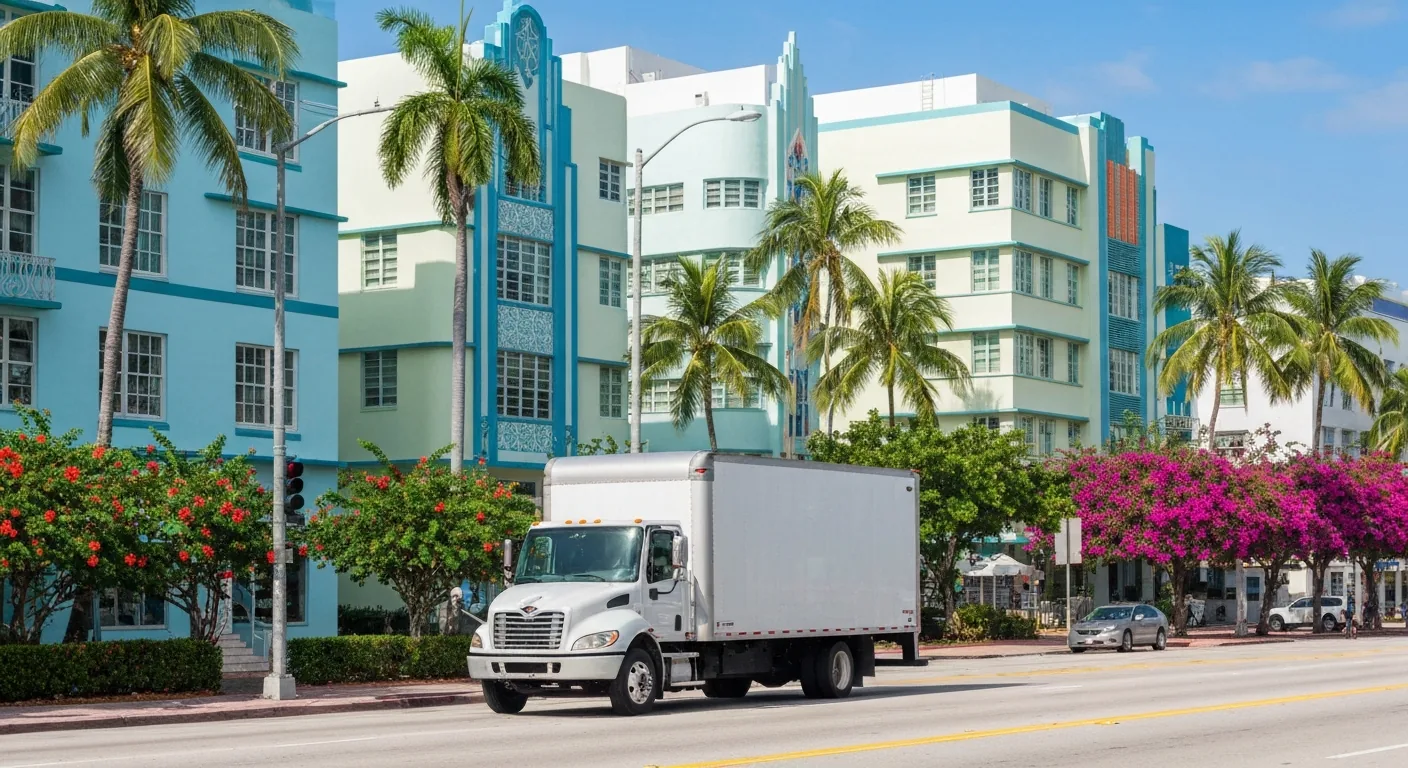
Miami Moving Cost by Home Size
Miami is one of Florida’s most expensive cities to move in. Traffic, building restrictions, and year-round demand push rates above the state average:
| Home Size | Local (<50 mi) | Intrastate (50–300 mi) | Interstate |
|---|---|---|---|
| Studio / 1 BR | $1,100–$1,900 | $1,600–$3,200 | $3,500–$6,500 |
| 2 Bedroom | $1,400–$2,800 | $2,200–$4,600 | $4,500–$8,500 |
| 3 Bedroom | $2,100–$4,200 | $3,200–$6,500 | $6,000–$12,000 |
| 4+ Bedroom | $3,000–$6,500 | $4,500–$9,000 | $8,000–$15,000 |
High-rise buildings add $150–$400 in elevator and COI fees not reflected above.
Why Miami Moves Cost More Than Other Florida Cities
Miami’s higher rates aren’t arbitrary. Several structural factors drive up costs:
Building requirements — The vast majority of Miami’s housing stock is condos and apartments. Most buildings require:
- Elevator or freight elevator reservations ($75–$200)
- Certificate of Insurance (COI) naming the building
- Move-in/out windows (often weekdays only, 9am–5pm)
- Security deposits for elevator pads ($100–$300, usually refunded)
Traffic and drive time — Miami traffic adds 30–90 minutes of billable drive time to many local moves. Movers in Brickell moving someone to Doral can spend 90 minutes in traffic on a bad day.
Year-round demand — Unlike Tampa or Orlando, Miami’s peak season runs October through April when snowbirds arrive. This is the opposite of the state pattern.
International move complexity — Miami is a major hub for international relocations. Movers specializing in customs clearance charge premium rates.
Miami Moving Cost by Neighborhood
Where you’re moving in Miami affects your cost significantly:
| Neighborhood | Access | Typical Add-ons | Cost Impact |
|---|---|---|---|
| Brickell / Downtown | High-rises, tight streets | COI, elevator fee, parking | +$200–$400 |
| Coral Gables | Houses, wide streets | Usually none | +$0 |
| Miami Beach | Bridges, island access, condos | COI, elevator, bridge waits | +$300–$500 |
| Wynwood / Little Havana | Street parking limited | Long carry possible | +$50–$150 |
| Coconut Grove | Mix of houses and condos | Varies by building | +$0–$200 |
| Aventura / Sunny Isles | Dense high-rise towers | COI + elevator always | +$200–$400 |
Popular Miami Moving Routes and Estimated Cost
| Route | Distance | Estimated Cost (3 BR) |
|---|---|---|
| Miami → Fort Lauderdale | ~30 miles | $1,400–$2,800 |
| Miami → Orlando | ~235 miles | $2,800–$5,500 |
| Miami → Tampa | ~280 miles | $3,000–$6,000 |
| Miami → Atlanta | ~665 miles | $5,000–$9,500 |
| Miami → New York | ~1,285 miles | $6,500–$12,000 |
| Miami → Houston | ~1,190 miles | $6,000–$11,500 |
How to Save Money on a Miami Move
Miami has fewer options for cost savings than inland cities — but these still help:
- Move May–September — Off-peak for Miami (opposite of most FL cities). Rates drop and availability improves.
- Book 6–8 weeks in advance — Miami movers fill up fast in peak season. Last-minute bookings get premium pricing.
- Pre-clear building requirements — Call your building management before booking a mover. Get the COI requirements in writing and share them with your mover on day one — surprises cost time.
- Schedule morning slots — Miami traffic is worst 7–9am and 4–7pm. An 8am start is a 6am start in terms of productive moving time.
- Self-pack non-fragile items — Books, clothes, and kitchenware are easy to pack. Packing labor in Miami runs $80–$120/hour extra.
Miami-Specific Moving Tips
Verify your mover carries their own COI — Don’t hire a company that asks you to waive the building’s insurance requirement. They’re cutting corners.
Confirm freight elevator access — Residential elevators are not built for furniture. Freight elevators in Miami buildings often have specific reservation windows — sometimes just 2 hours per move. Book this through building management before moving day, not the morning of.
Parking permits — Miami requires moving company trucks to obtain a temporary parking permit for street parking. Professional movers handle this automatically. DIY renters often get tickets.
Hurricane shutters — If you’re moving into a home with accordion shutters, confirm the movers know how to work around them. Improper handling damages tracks.