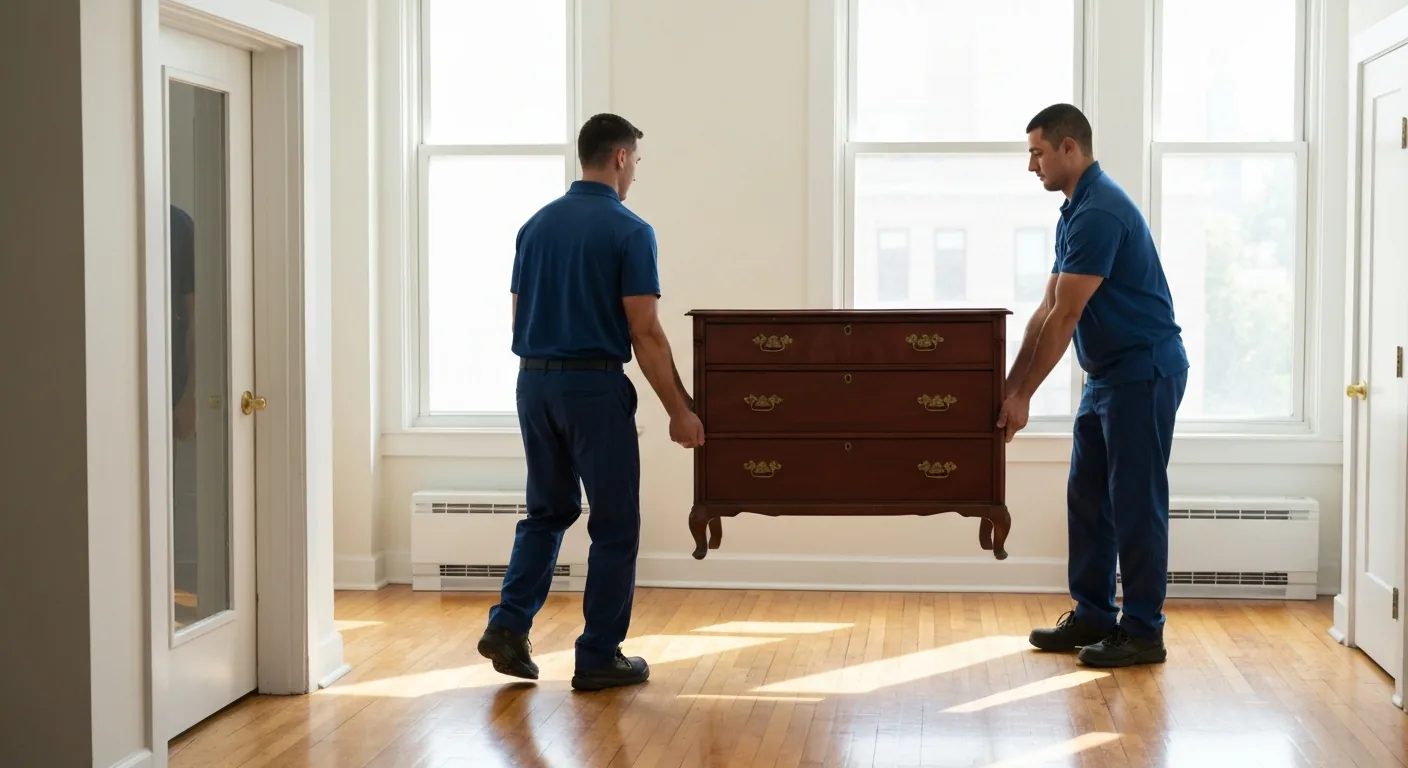
The Night Before Moving Day
Don’t leave these for moving morning:
- Pack your essentials bag — Items that ride with you, not on the truck:
- Government IDs, passports, birth certificates, social security cards
- Laptop, tablet, phone chargers
- Medications (especially anything time-sensitive)
- Valuables: jewelry, cash, credit cards
- Moving day snacks and water
- Moving company contact info (driver’s cell number)
- New home keys, access codes, gate openers
- Reservation confirmation (elevator, building move-in window)
- Defrost the fridge — Must be done 24 hours before pickup. A wet fridge causes truck damage and mold during transport.
- Set your morning alarm — Movers typically arrive between 7–9am. Be up and ready 30 minutes before the earliest arrival window.
- Confirm the truck can access your address — Any low-clearance areas, narrow streets, or parking restrictions? Alert the driver now, not at 7am.
- Charge your phone — You’ll need it for photos, contacts, and navigation all day.
When the Movers Arrive
First 15 Minutes
- Check the crew’s ID and company name — Confirm they’re from the company you booked. Brokered moves sometimes dispatch surprise third-party carriers.
- Review the Bill of Lading before signing
- Price matches your estimate exactly
- Estimate type is correct (binding / non-binding / not-to-exceed)
- Origin address is correct
- Destination address is correct
- Delivery window is as agreed
- Inventory list is accurate
- Walk through with the foreman — Go room by room. Point out any existing damage (scratches, dents, broken items) before loading. Get the foreman to initial these on the Bill of Lading.
- Confirm specialty item handling — Piano, gun safe, artwork, antiques. These should already be noted in the contract but verbally confirm the plan.
While the Crew Loads
- Stay available — Don’t leave the property. Answer questions quickly to keep the crew moving efficiently (you’re often paying by the hour for local moves).
- Direct the crew on priority — Tell them which boxes and furniture to load last (things you need first at the destination go on last, so they come off first).
- Keep children and pets out of the work path — Moving day is not the day for this. Arrange childcare or pet care in advance.
- Don’t offer to help load — This sounds counterintuitive, but most movers prefer you don’t help. Liability complications arise if a homeowner is injured helping. Stay clear of the heavy lifting.
- Photograph any item that concerns you — Loading is the last time you see items before delivery. If something looks borderline already, document it now.
Before the Truck Leaves
This step is where most people fail. The truck is loaded, the crew wants to go — but don’t rush this:
- Do a complete final walkthrough — every room
- Every closet (upper and lower shelves)
- Every cabinet and drawer
- Under every bed
- Garage and storage areas (every shelf and corner)
- Attic or crawl space if accessible
- Outdoor spaces: patio, shed, side yard
- Laundry room (items left on top of machines, dryer lint trap items)
- Bathrooms (medicine cabinets, under-sink cabinets)
- Check appliances — Washer hoses disconnected? Dryer disconnected and vented? Fridge water line disconnected?
- Return all building access items
- Parking passes and key fobs
- Mailbox keys
- Garage door openers
- Elevator key (if applicable)
- Pool/amenity key
- Turn off everything
- All lights
- HVAC (if you’re responsible for it)
- Water main (especially for extended vacancy)
- Stove knobs
- Photograph the empty property — Timestamped photos of each room in move-out condition protect your security deposit.
- Get the driver’s cell number — You’ll need to reach them en route or at delivery.
At Delivery
Before You Sign Anything
- Walk through each room as items come off the truck — You can direct placement and spot damage in real time.
- Inspect furniture surfaces — Check tabletops, dresser fronts, sofa fabric, and bed frame rails. Damage from loading and transit shows up on surface-facing surfaces.
- Open boxes marked FRAGILE — If glassware or electronics are broken, you need to note it now.
- Check electronics — You don’t need to fully test everything, but check screens on TVs and monitors for cracks before the crew leaves.
- Note any damage on the delivery receipt — Write it specifically: “Dining table top has a 6-inch scratch on the right side.” Get the foreman to sign next to your notes.
- Do not sign “received in good condition” until you’ve inspected — Once you sign this without noting damage, your claim rights are severely limited.
After the Crew Leaves
- Tip the crew — Cash, directly to each mover.
- File damage notes immediately — Email your moving company within 24 hours with photos and written description of any damage, even if you already noted it on the receipt.
- Locate and turn on all utilities — Water shutoff, circuit breaker, HVAC.
- Check all locks and access — Confirm keys work, garage opens, alarm is set up.
- Locate the nearest urgent care — Before you need it.
Moving Day Red Flags to Watch For
Even on moving day, bad actors reveal themselves. Stop the move and call the company’s main office if you see:
- Movers demand cash payment before unloading — This is a “hostage load” scam. In Florida, it’s illegal (FS 507.06). Do not pay in full before delivery is complete.
- The Bill of Lading price is higher than your estimate — Do not sign. Call the company immediately.
- Movers arrive in an unmarked or rented truck — Could be a broker job gone wrong. Verify who the actual carrier is.
- Movers refuse to do a pre-move walkthrough — This is how damage disputes arise. Insist on it.
- Movers add fees not on your estimate at delivery — Legitimate add-ons must be listed in advance. Surprise charges at delivery are often not enforceable.
Florida-Specific Moving Day Notes
Heat — Florida summer moving days hit 95–100°F with high humidity by 10am. Start as early as possible (7–8am) to get the bulk of the work done before peak heat. Have water available for the crew — it’s a courtesy and keeps them working safely.
Afternoon thunderstorms — Florida gets near-daily thunderstorms June through September, typically 2–5pm. Schedule loading for morning. If storms hit mid-move, pause and wait — electronics and upholstered furniture exposed to heavy rain during loading or unloading are not covered by released value protection.
Condo and HOA moves — Your elevator reservation window is non-negotiable. If the crew is late or runs long, the building may cancel your slot and charge a fee. Build buffer time into your arrival window.