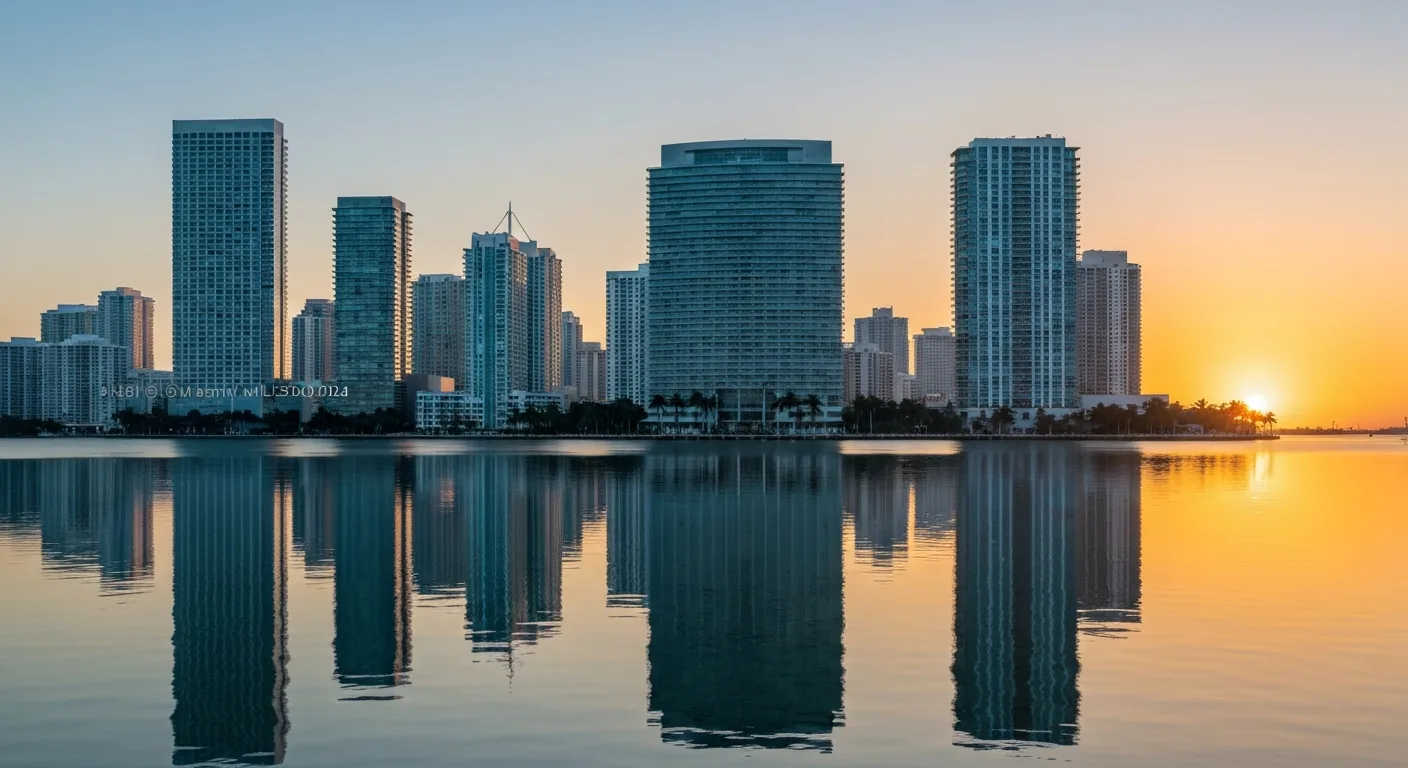
Why People Move to Miami
Miami draws a unique mix: Latin American and Caribbean immigrants, Northeast transplants seeking warm weather and no income tax, tech workers (the city actively recruited remote workers post-2020), finance professionals (Citadel, Blackstone, and others have relocated or expanded here), and retirees.
The city has genuine energy and culture that no other Florida city matches. If you want international cuisine, a multilingual social scene, waterfront lifestyle, and a city that doesn’t sleep at 9pm — Miami delivers.
The tradeoffs are real: expensive housing, brutal traffic, high insurance costs, and a summer that feels like you’re living inside a steam room.
Miami Cost of Living vs. Other Cities (2026)
| Expense | Miami | Tampa | Orlando | Los Angeles | New York |
|---|---|---|---|---|---|
| 1 BR Rent (avg) | $2,400 | $1,800 | $1,750 | $2,800 | $3,800 |
| Home Price (median) | $620,000 | $385,000 | $370,000 | $850,000 | $780,000 |
| Property Insurance (house) | $6,000–$10,000 | $2,500–$5,000 | $2,000–$4,000 | $1,800–$3,500 | $2,500–$4,000 |
| State Income Tax | None | None | None | 13.3% max | 10.9% max |
| Car Insurance (avg annual) | $3,400 | $2,600 | $2,400 | $2,000 | $3,200 |
Insurance costs are Miami’s hidden expense. Budget $500–$800/month for property + car insurance if you own a house.
Miami Neighborhoods: Where to Live
Brickell — Miami’s financial district. Dense high-rises, excellent walkability (for Miami), upscale restaurants, and a young professional population. Rent: $2,800–$4,500/month for a 1BR. No true neighborhood feel — it’s an urban lifestyle play.
Coral Gables — The “Gables” is where Miami professionals with families often land. Tree-lined Mediterranean streets, top-rated public and private schools, low crime, quiet. Median home: $1.2M+. Rent: $2,500–$4,000/month.
Coconut Grove — Bohemian, older, quieter. Great bay access, restaurants, and parks. Less glitzy than South Beach, more relaxed than Brickell. Popular with established professionals and families.
Wynwood — Miami’s arts district, now heavily gentrified. Good for young creatives. Street art, galleries, breweries. Rent: $2,200–$3,500/month. Limited parking.
Miami Beach / South Beach — Iconic but seasonal. Winter brings tourists and traffic. Locals love the beach access but many tire of the congestion. Condos are abundant; prices vary widely.
Little Havana / Westchester — More affordable ($1,600–$2,400/month rent), strongly Spanish-speaking, authentic Cuban culture. Lower-income areas interspersed with gentrifying blocks.
Doral — Suburb west of Miami, large Venezuelan and Colombian population. More affordable than coastal neighborhoods, newer housing stock, Doral Central Park. Popular with families relocating from South America.
Aventura / Sunny Isles — Northern Miami-Dade, high-rise towers, luxury market. Large Russian-speaking and Brazilian population. Excellent schools and safer crime stats than central Miami.
Miami Weather and Lifestyle
November–April: Miami’s best months. 70–82°F, low humidity, clear skies. Beach weather even in February. This is when snowbirds arrive and prices go up.
May–June: Transition period. Humidity climbs, occasional storms, still pleasant enough. Local advantage — tourists thin out.
July–September: Miami summer. High 88–94°F with heat index of 100–105°F daily. Afternoon thunderstorms almost guaranteed. This is when locals go to Europe or the mountains.
Hurricane season: June 1 – November 30. Miami-Dade has a sophisticated alert system and mandatory evacuation protocol by zone (A/B/C/D). Take it seriously — have a kit, know your zone, and have an out-of-county plan.
Getting Around Miami
Miami is car-dependent with pockets of density:
- Metrorail — Light rail connecting Downtown, Brickell, Coconut Grove, and Coral Gables. Limited but functional.
- Metromover — Free elevated tram connecting Brickell and Downtown. Useful within those areas.
- Tri-Rail — Commuter rail connecting Miami, Fort Lauderdale, and West Palm Beach. Good for cross-county commuters.
- Brightline — Private high-speed rail connecting Miami to Fort Lauderdale, West Palm Beach, and (soon) Orlando.
- I-95 / SR-836 / Palmetto — The car network. Expect 45–90 min for cross-county trips during rush hour.
Most Miami residents own cars. Parking downtown runs $15–$35/day or $150–$300/month in a garage.
What to Do First After Moving to Miami
- Get a Florida driver’s license — Required within 30 days of establishing residency. Bring proof of identity, SSN, and two proofs of Florida address.
- Register your car — Florida plates within 10 days of employment or 90 days of residency.
- Get renters or homeowners insurance quotes immediately — Miami’s insurance market is stressed. Some carriers don’t write new policies in high-risk zip codes. Don’t assume you’ll get coverage easily.
- Find your hurricane evacuation zone — Register at miamidade.gov/emergency. Zone A is highest risk.
- Open a local bank account — Miami has strong representation from Latin American banks (Banco de Chile, Banco Santander branches) and regional Florida banks. Many landlords and building managers prefer local checks.